
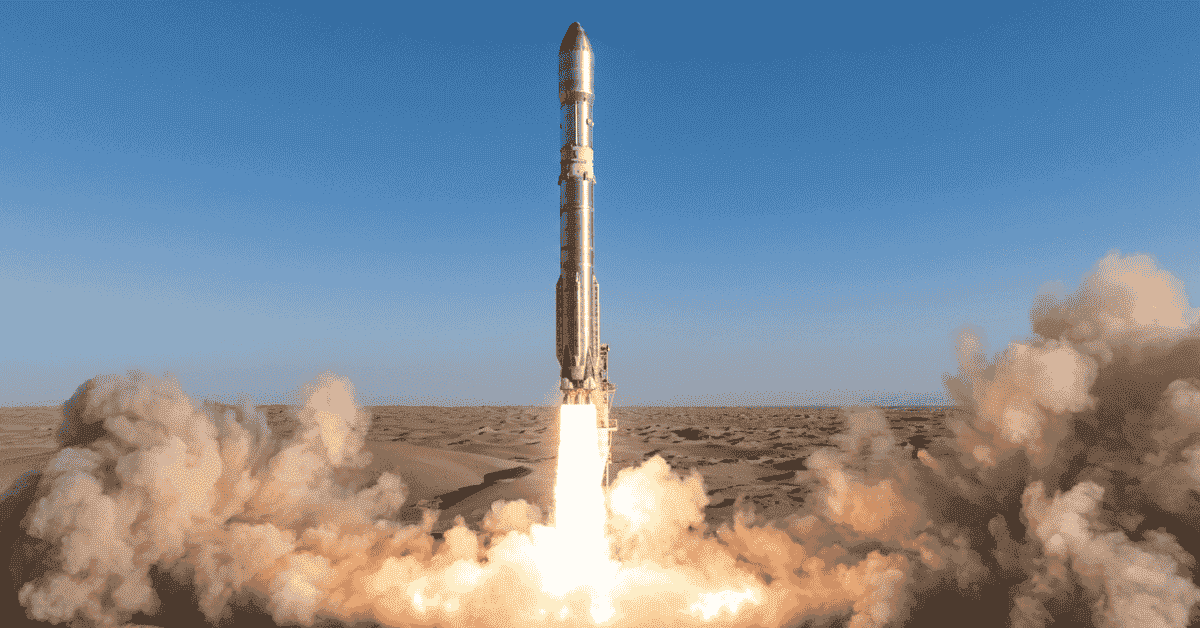
A Chinese startup just pulled off something only two other companies in the world have ever done.
On Wednesday, August 19, LandSpace launched its Zhuque-3 rocket from the Dongfeng Commercial Space Innovation Pilot Zone in northwestern China, delivered a satellite to orbit, and then successfully landed the rocket's first-stage booster back on solid ground in Gansu province. It's China's first-ever recovery of an orbital-class rocket booster using landing legs, putting LandSpace in the same club as SpaceX and Blue Origin, the only other private companies to have pulled off this feat.
A Rocket the Size of Falcon 9
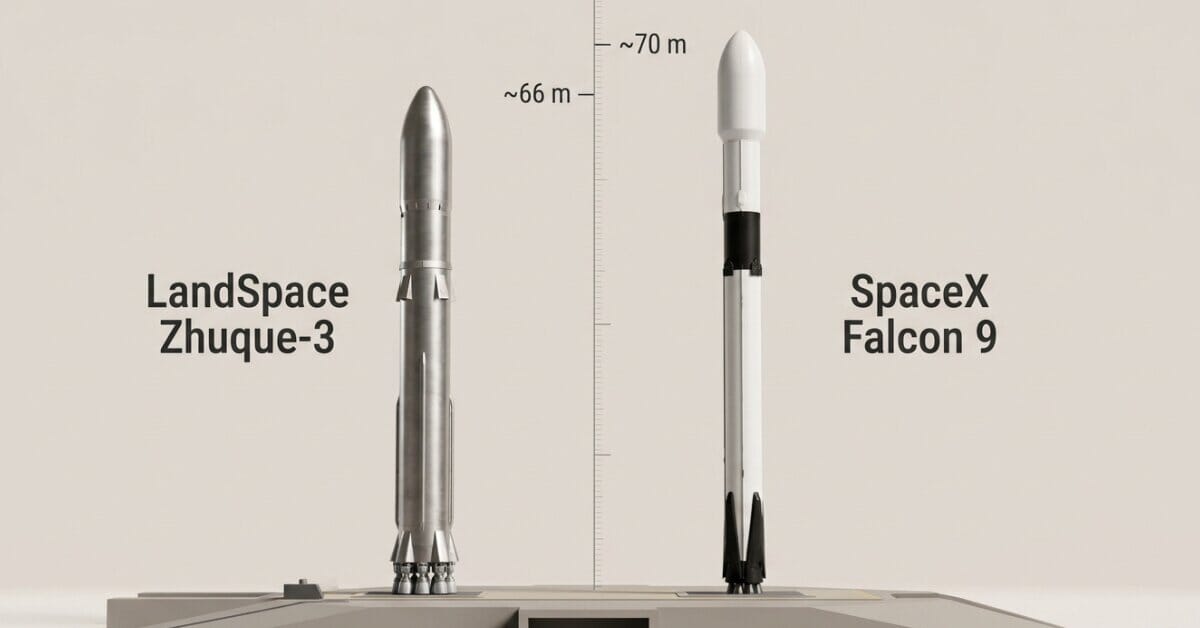
The Zhuque-3 is roughly on par with SpaceX's Falcon 9 in size, about 66.1 meters tall, compared to Falcon 9's 70 meters, and it borrows design ideas from both Falcon 9 and Starship: a stainless-steel body and nine engines that burn liquid methane instead of traditional rocket fuel. About 137 seconds after liftoff, the first and second stages separated, with the second stage carrying the Honghu-03 satellite — a demonstration satellite testing new technology like an optical laser link — into its planned orbit while the booster began its descent back to Earth.
This was actually the rocket's second flight. Its December 2025 debut reached orbit successfully but failed to land the booster, making this week's touchdown a redemption of sorts and a major technical validation for the company.
Not a Perfect Landing
The landing wasn't entirely flawless. Leftover propellant reportedly caught fire near the landing gear shortly after touchdown, damaging that section of the booster and causing part of it to collapse. LandSpace says it made several design changes ahead of this flight, including adjusting how many engines fire during the final landing burn and adding safety systems to better predict the landing point.
Still, engineers are now inspecting the recovered stage, and the company says it aims to refly it within the next six months — a milestone that would prove the booster can genuinely be reused, not just landed once for show. On the other side, NASA is planning to go to the moon again.
Why This Matters
Reusable rockets are the key to making spaceflight cheaper and more frequent. The same idea that turned SpaceX into the dominant force in the global launch market. Building a new rocket for every single flight is expensive and slow; reusing one that's already flown cuts costs dramatically and lets companies launch far more often.
If LandSpace can successfully refly this booster, it would mark real progress toward routine, low-cost launches in China, and add serious competition to a reusable-rocket race that, until recently, only SpaceX had truly mastered. It also comes just weeks after China's state-owned aerospace giant CASC recovered its own reusable booster on a Long March 10B rocket, suggesting China is now pushing hard on reusability from both its government-run and private space sectors at once.
The Business Stakes
There's a financial angle here too. LandSpace is reportedly pursuing a roughly $1.1 billion IPO on Shanghai's STAR Market, so proving out its reusable rocket technology isn't just about engineering pride — it's central to the company's pitch to investors. The company's long-term goal is even more ambitious: flying each booster up to 20 times, a target that, if achieved, would bring LandSpace's economics closer to SpaceX's playbook of rapid, low-cost launch turnaround.
For now, the world watches to see whether LandSpace can turn this landing into an actual reflight, the step that would truly prove reusability works.