
Antimatter has one big problem. The moment it touches normal matter, both vanish in a burst of energy. So how is antimatter stored safely, without ever letting that happen?
The answer is simple. Scientists never let antimatter touch anything at all.
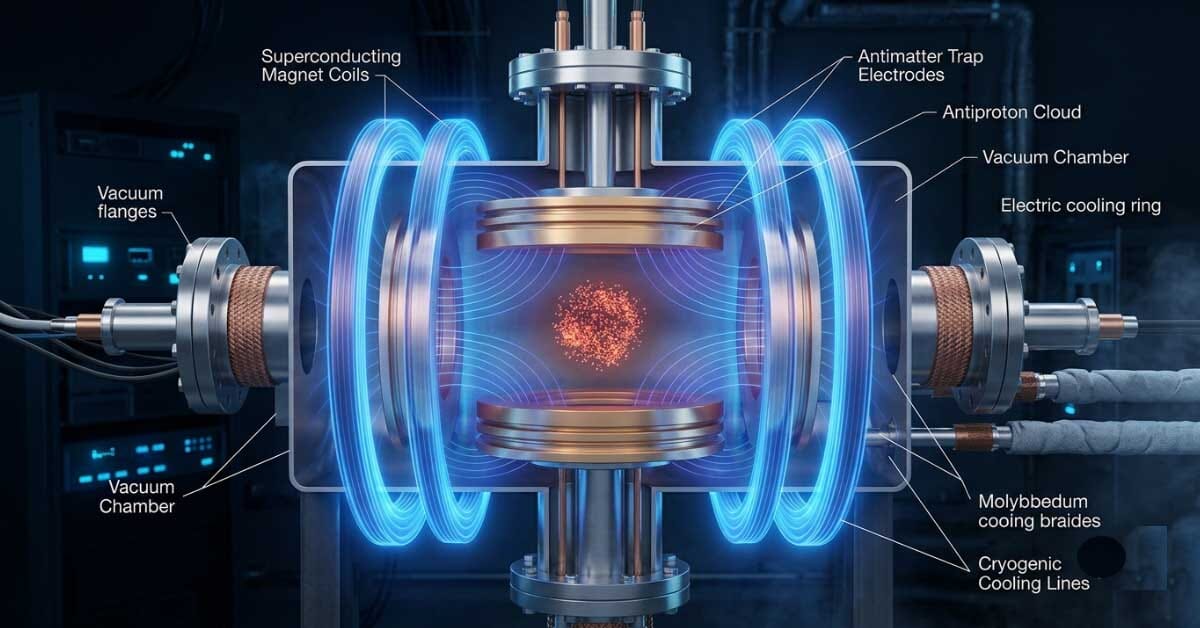
They hold it inside a machine called a Penning trap. This device uses magnets and electric fields to suspend antimatter particles in empty space. The particles float freely. They never touch a wall, a wire, or any solid surface.
Here is how the whole system works, step by step.
Table of Contents
Why You Can't Store Antimatter in a Normal Box
Every box, jar, or container is made of ordinary matter. If antimatter touches even a tiny speck of it, both disappear in a flash of energy. This is called annihilation.
So there is no normal way to hold antimatter. You can't seal it in a jar. You can't wrap it in metal. Scientists have to trap it using invisible forces instead of a solid container. Do you want to know how dangerous antimatter is?
The Penning Trap: An Invisible Container
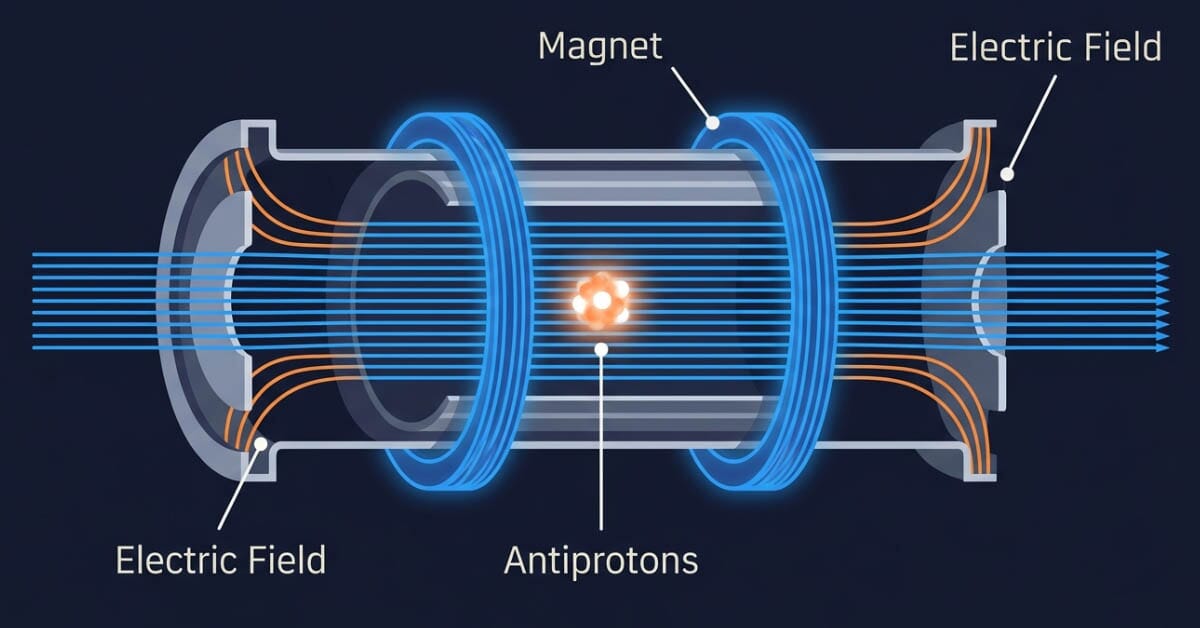
A Penning trap holds antimatter by using two forces that work together.
A strong magnet. This makes antimatter particles spin in tight circles instead of drifting outward.
An electric field. This pushes the particles back and forth, so they cannot escape out the ends of the trap.
Together, these forces act like an invisible cage. The antimatter floats in the middle. It never touches anything solid.
This method works. At CERN, the BASE experiment has kept antiprotons trapped and stable for more than a year at a time.
Why the Trap Needs a Super Clean Vacuum
A magnet alone is not enough to keep antimatter safe. If even a wisp of gas drifts into the trap, the antimatter will collide with it and vanish.
That's why the trap sits inside an extremely clean vacuum. This space holds almost nothing at all. It is emptier than the space between stars. When you know that, you will be surprised: 2.5 trillion kg of antimatter would be needed to destroy Earth.
Why Everything Is Kept Extremely Cold
The trap is also cooled to around minus 265°C. That's close to the coldest temperature physically possible.
Cold particles move slowly. Slow particles are far easier to trap and control. Hot particles move fast and bounce around. That makes them much more likely to escape and hit a wall.
So the deep cold isn't just for storage. It's what makes the trap work at all.
Can Antimatter Be Moved From Place to Place?
For years, antimatter could only stay in one lab. Moving it seemed far too risky.
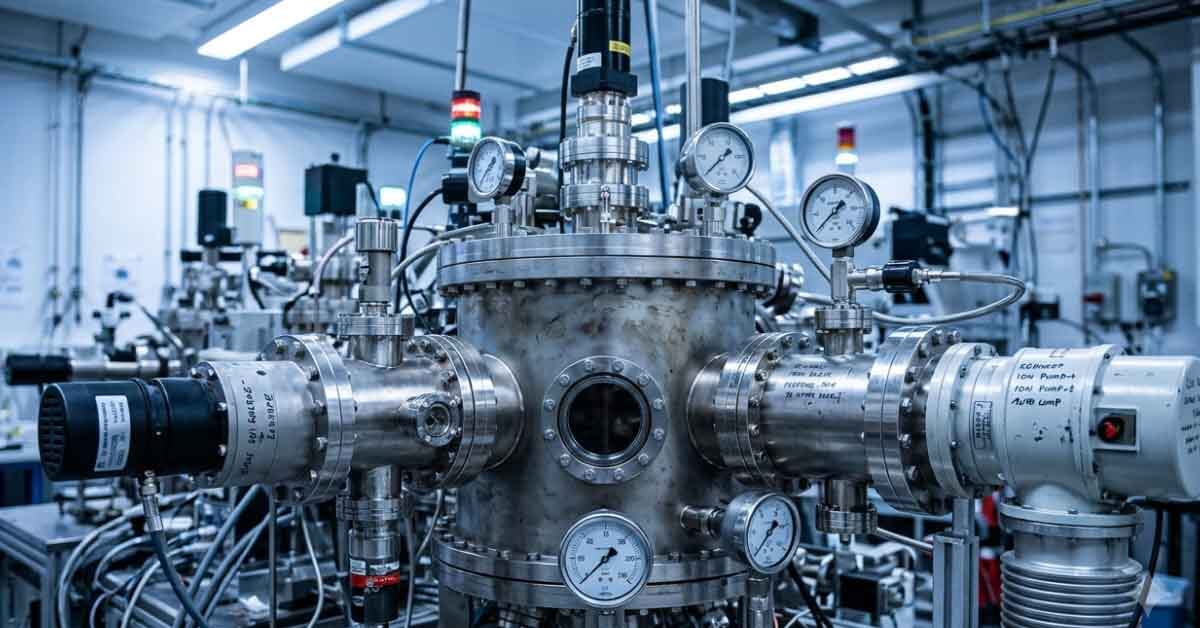
That changed in November 2025. A CERN team built a portable Penning trap called BASE-STEP. It holds antiprotons inside a superconducting magnet, cooled with liquid helium, sealed in a near-perfect vacuum. They loaded it onto a truck and drove it in a short test loop, about 8 kilometers, around CERN's Meyrin site, all while keeping 92 antiprotons safely trapped inside.
It worked. This was the world's first controlled, reversible transport of antimatter outside a fixed lab setup.
The test loop stayed within CERN's own campus. But the goal is much bigger. Researchers want to eventually deliver antiprotons to outside labs, such as Heinrich Heine University in Düsseldorf, for high-precision experiments that CERN's own facility can't perform.
With storage this hard and expensive, you might wonder why scientists bother at all. The answer is that antimatter isn't just a lab curiosity; it already powers real tools in medicine, space research, and physics. See what antimatter is actually used for.
Why Storing Antimatter Costs So Much
Making and storing antimatter isn't just difficult. It's staggeringly expensive.
It takes massive machines and huge amounts of energy to produce even a tiny amount. By some estimates, a single gram of antimatter would cost several quadrillion dollars to make. That price tag is why only a handful of labs in the world can attempt this kind of work at all.
Quick Recap
- Antimatter destroys itself the instant it touches any surface.
- It's held inside a Penning trap, using magnets and electric fields.
- The trap sits in a super clean vacuum, so no stray gas can get in.
- Everything is kept extremely cold to slow the particles down.
- In November 2025, CERN moved trapped antimatter by truck for the first time ever.