

The multiverse theory is the idea that our universe may not be the only one. Instead, it could be one of many universes, each with its own physical laws, space, and history. The theory comes from several branches of physics, including cosmic inflation, quantum mechanics, and string theory. It is not proven, and it remains one of the most debated ideas in modern science.
Table of Contents
What Is the Multiverse Theory?
The multiverse theory suggests that our universe is just one of many universes that may exist. In this view, each universe could have its own laws of physics, its own history, and its own set of constants, like the strength of gravity or the mass of an electron.
This isn't a single, unified theory. It's a collection of related ideas that come from different areas of physics. Some grew out of cosmology, the study of how the universe began and evolved. Others grew out of quantum mechanics, the physics of the very small. A few come from string theory, an attempt to unify all the forces of nature.
What connects them is a simple question: if the physical processes that created our universe happened once, why couldn't they happen again, somewhere else, under different conditions?
Where Did the Multiverse Idea Come From?
The multiverse isn't a new idea in philosophy. Ancient thinkers speculated about other worlds long before modern science existed. But the modern, physics-based version of the theory developed gradually through the 20th century.
A major turning point came with cosmic inflation, a theory developed by physicist Alan Guth in 1980. Inflation proposes that the very early universe expanded at an incredibly fast rate for a tiny fraction of a second. This idea solved several problems with the standard Big Bang model, such as why the universe looks so uniform in every direction.
Physicist Andrei Linde later extended this idea into eternal inflation. In this version, inflation doesn't stop everywhere at once. Instead, it continues forever in some regions while ending in others. Each region where inflation stops can form its own separate "bubble universe." Our universe would just be one bubble among countless others.
Around the same time, ideas from quantum mechanics and string theory were pointing toward similar conclusions, though through very different reasoning. Together, these separate lines of thinking gave rise to what we now call multiverse theory.
The Main Types of Multiverse Theories
There isn't one multiverse theory there are several, and they don't all describe the same thing. Understanding the differences helps make sense of why scientists discuss the multiverse in such different ways.
The Inflationary Multiverse (Bubble Universes)
This version comes directly from eternal inflation. If inflation never fully stops, it keeps creating new regions of space. Each region that stops inflating becomes its own universe, isolated from the others by vast stretches of still-inflating space.
These bubble universes could have different physical constants. Some might allow stars and galaxies to form, similar to ours. Others might expand too fast, or too slow, for any structure to form at all.

The Many-Worlds Interpretation of Quantum Mechanics
This idea comes from a very different place: the strange behavior of particles at the quantum level. In standard quantum mechanics, particles can exist in multiple possible states until they're measured, at which point one outcome is "selected."
Physicist Hugh Everett proposed an alternative in 1957. Instead of one outcome being selected, every possible outcome actually happens, each in its own separate branch of reality. Under this interpretation, the universe is constantly splitting into new versions based on the outcomes of quantum events.
This is one of the most debated interpretations in physics. It solves certain quantum puzzles elegantly, but it implies an almost unimaginable number of parallel realities.

The String Theory Landscape
String theory attempts to describe all particles and forces as tiny vibrating strings rather than point particles. One consequence of string theory is that it allows for an enormous number of possible configurations for extra spatial dimensions, sometimes estimated at googols of possibilities.
Each configuration could correspond to a universe with different physical laws. This vast collection of possibilities is often called the "string landscape," and it's one of the reasons some physicists connect string theory to multiverse ideas.
The Mathematical Universe Hypothesis
A more speculative idea, proposed by physicist Max Tegmark, suggests that any mathematically consistent structure could correspond to a real, physically existing universe. Under this view, reality itself is fundamentally mathematical, and every possible mathematical structure exists as its own universe.
This is one of the most philosophical versions of multiverse theory and is not widely tested or accepted the way inflationary models are.
Is There Any Scientific Evidence for the Multiverse?
This is the most important question, and the honest answer is 'not yet', at least not direct evidence.
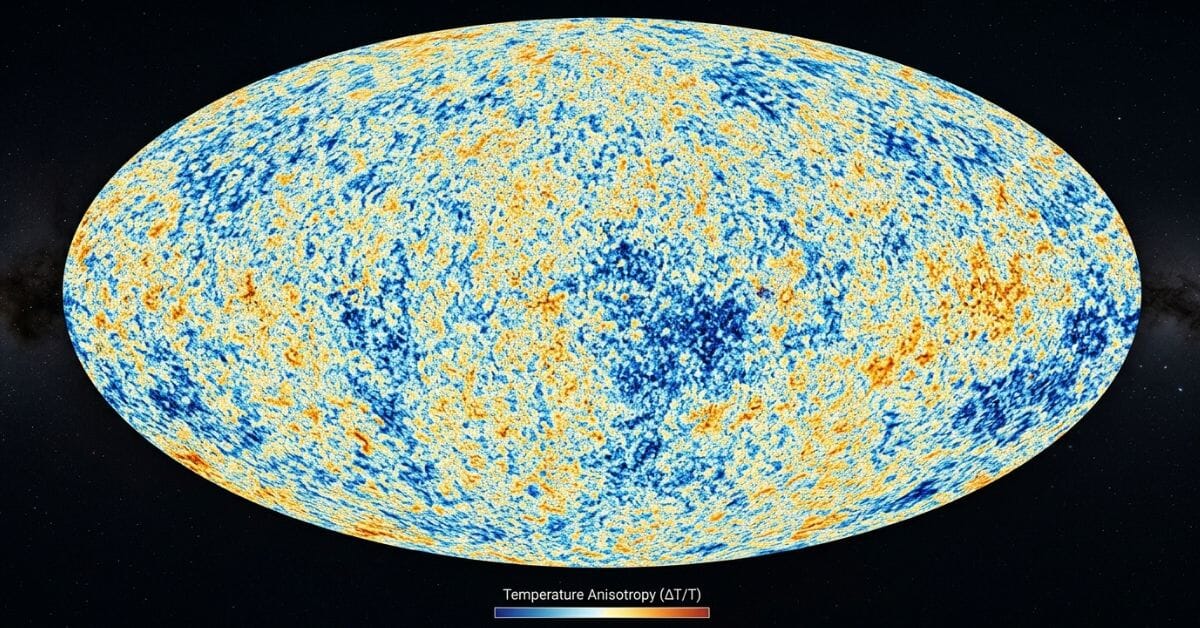
No telescope, satellite, or experiment has ever observed another universe. What exists instead is indirect theoretical support. Cosmic inflation, for example, is well supported by observations of the cosmic microwave background, the faint leftover radiation from the early universe, mapped in detail by missions like NASA's WMAP and ESA's Planck satellite. Inflation fits this data extremely well.
The catch is that if inflation is correct, eternal inflation and therefore a multiverse may be a natural consequence of it. In other words, the multiverse isn't something scientists set out to prove. It's something that falls out of theories built to explain things we can actually observe.
Some researchers have proposed indirect tests, such as looking for faint imprints in the cosmic microwave background that could result from a collision with a neighboring bubble universe. So far, no confirmed signal of this kind has been found.
Because other universes, if they exist, would likely lie beyond the observable universe entirely, many physicists question whether the multiverse can ever be tested directly. This is a central criticism of the theory.
Why Can't We See Other Universes?
The observable universe is limited by the speed of light and the age of the universe itself. Light has only had about 13.8 billion years to travel, so we can only see objects whose light has had time to reach us.
If other universes exist beyond this boundary, or in separate "bubbles" of space entirely, their light would never reach us. Even if a neighboring universe were relatively close in some theoretical sense, the space between bubble universes in the inflationary model expands too fast for light or information to cross it.
This is why the multiverse remains a theoretical extension of physics rather than an observed phenomenon.
Multiverse vs. Universe: What's the Difference?
| Feature | Universe | Multiverse |
|---|---|---|
| Definition | Everything we can observe and detect | A hypothetical collection of many universes |
| Evidence | Extensive direct observational evidence | No direct observational evidence |
| Physical laws | Consistent throughout | May differ between universes |
| Scientific status | Well-established | Theoretical extension of physics |
| Observability | Partially observable (observable universe) | Not observable with current technology |
Common Misconceptions About the Multiverse
Misconception: The multiverse is a proven scientific fact. It isn't. It's a theoretical idea supported by extensions of well-tested physics, not a confirmed discovery.
Misconception: All multiverse theories describe the same thing. They don't. The inflationary multiverse, the many-worlds interpretation, and the string theory landscape come from different physics and describe very different kinds of other universes.
Misconception: Scientists who study the multiverse believe in alternate versions of you. That specific idea belongs mainly to the many-worlds interpretation, not to multiverse theory as a whole.
Misconception: The multiverse is just science fiction. While science fiction has popularized the concept, the underlying physics comes from serious theoretical work in cosmology and quantum mechanics, even though it remains unconfirmed.
Why the Multiverse Theory Matters
Even without direct proof, multiverse theory plays a meaningful role in physics. It helps explain why our universe has the specific physical constants it does, a question known as the fine-tuning problem. If many universes exist with different constants, it's less surprising that we find ourselves in one that supports stars, galaxies, and life.
The theory also pushes physicists to refine and test related ideas, such as inflation and string theory, which have real, checkable predictions of their own. In this sense, the multiverse acts as a bridge between confirmed physics and open questions that scientists are still working to answer.
If you want to go deeper into whether the multiverse could actually be real, this related article breaks down the debate in more detail: Is the Multiverse Real?
The multiverse also connects to particle physics in interesting ways. Some of the extra dimensions predicted by string theory relate to the same theoretical framework that helped physicists search for the Higgs boson, often nicknamed the "God particle." You can read more about that discovery here: What Is the God Particle?
Recommended Reading
If you want a deeper, well-written exploration of these ideas, physicist and science historian Paul Halpern's book is one of the most accessible guides available for curious readers.

See Price on Amazon
The Allure of the Multiverse: Extra Dimensions, Other Worlds, and Parallel Universes. Paul Halpern traces the history of multiverse thinking from early philosophy through modern physics, covering inflation, string theory, and quantum interpretations in clear, engaging language.
This is an affiliate link. If you purchase through it, Science Spherex may earn a commission at no extra cost to you.
The multiverse theory proposes that our universe may be one of many, each shaped by different physical laws and different histories. The idea comes from several respected areas of physics, including cosmic inflation, quantum mechanics, and string theory, but it hasn't been confirmed through direct observation.
That doesn't make it meaningless. It reflects real, unresolved questions about why our universe looks the way it does, and it continues to guide research into inflation, particle physics, and the fundamental structure of reality. For now, the multiverse remains one of science's most compelling open questions rather than a settled answer.
Frequently Asked Questions
Is the multiverse theory scientifically accepted?
No. It's a serious topic of study among physicists, but it isn't confirmed. Many scientists support the underlying physics (like inflation) while remaining cautious about multiverse claims specifically.
Can the multiverse theory be tested?
Some researchers have proposed indirect tests, such as searching for signs of bubble universe collisions in the cosmic microwave background. No confirmed evidence has been found so far.
Is the many-worlds interpretation the same as the multiverse theory?
No. Many-worlds is one specific interpretation of quantum mechanics. The broader term "multiverse theory" also includes inflationary and string theory models, which describe different mechanisms entirely.
Do all versions of the multiverse involve infinite universes?
Not necessarily. Some models suggest an extremely large but finite number of universes, while others, like eternal inflation, suggest the process could continue indefinitely.
Why do some scientists reject the multiverse idea?
The main criticism is that it may not be testable. Many physicists consider testability a requirement for a theory to be fully scientific, which makes the multiverse controversial.
Does the multiverse theory mean there are other versions of me?
Only under specific interpretations, mainly the many-worlds interpretation. Other multiverse models don't necessarily imply duplicate versions of individual people.
How is the multiverse theory different from science fiction multiverses?
Science fiction often depicts easily accessible parallel worlds. Real multiverse theories describe universes that are extremely difficult or impossible to observe or reach, based on physical limits like the speed of light.
What is the strongest evidence supporting ideas related to the multiverse?
The strongest evidence supports cosmic inflation itself, based on cosmic microwave background data. The multiverse is a possible consequence of inflation, not something directly observed.