
Imagine living without lungs. No breathing. No oxygen. No normal way to survive. It sounds impossible. But in one rare medical case, a man actually lived for nearly 48 hours without lungs. It wasn't a miracle. It was science, technology, and fast medical thinking working together. Here's how it happened.
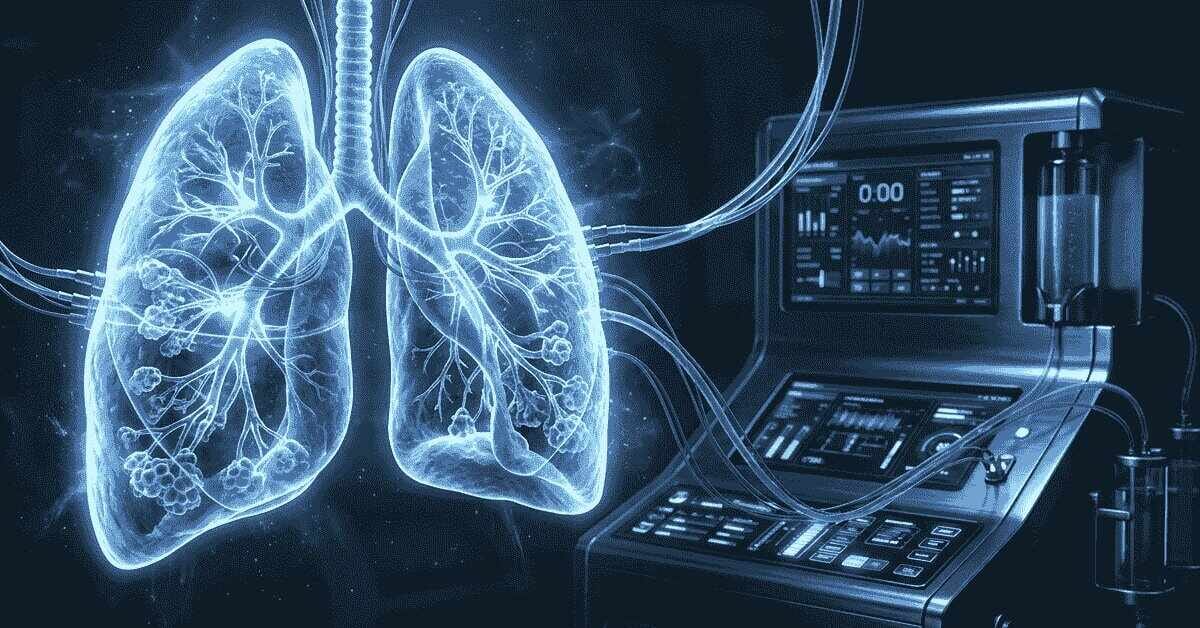
Table of Contents
What Happened in This Case?
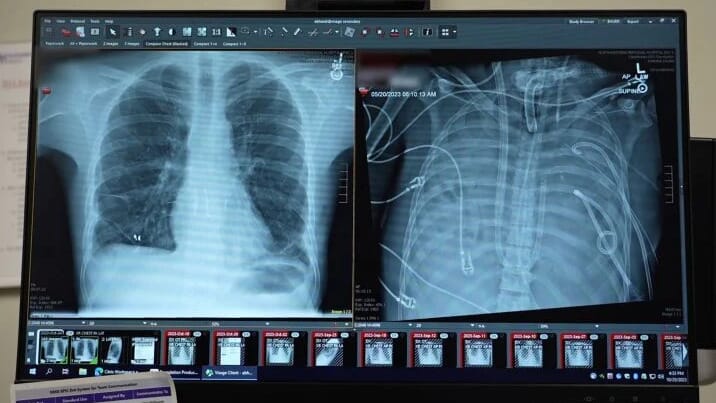
A 33-year-old man became critically ill after a severe infection destroyed his lungs. What began as the flu quickly turned into acute respiratory distress syndrome (ARDS) and bacterial pneumonia. His lungs filled with fluid. They stopped working. His heart and kidneys began to fail, too.
Doctors had no other option. They removed both lungs to stop the infection from spreading further.
Normally, that means death. But instead, doctors connected him to an advanced artificial lung system. For 48 hours, the machine kept him alive. Donor lungs became available in time. Surgeons performed a successful double lung transplant. The patient recovered fully and returned to normal life.
This case shows how far modern medicine has truly come.
How Did He Stay Alive Without Lungs?
Your lungs do one critical job. They bring oxygen into the blood and push carbon dioxide out. Without that process, the brain and organs shut down within minutes.
In this case, a machine took over that job completely.
It pulled blood out of the body, added oxygen, removed carbon dioxide, and pumped it back in. The lungs were gone, but their function continued outside the body.
That's why the patient didn't lose consciousness. That's why his brain stayed undamaged. Oxygen kept flowing without a single breath.
The Life-Saving Technology Behind It
The real hero of this story is the artificial lung system.
It works similarly to ECMO, Extracorporeal Membrane Oxygenation, a life-support system used in intensive care units. But in this case, doctors used a more advanced version. Some call it a "total artificial lung."
Here's what it did:
- Oxygenated blood outside the body
- Removed carbon dioxide
- Maintained proper blood flow through the heart
Older ECMO systems could support oxygen levels. But they couldn't fully handle circulation. This newer system solved that problem. That's what made surviving without lungs possible at all.
There are two main types of ECMO:
- Venovenous ECMO (VV-ECMO): Supports lung function
- Venoarterial ECMO (VA-ECMO): Supports both heart and lungs
In this case, the system replaced the lungs entirely. It ran nonstop. It was the bridge between life and a transplant.
Why Was This Only Temporary?
This technology is powerful. But it's not a long-term solution. Here's why:
- Infection risk: External tubes increase the chance of new infections
- Blood clotting: The machine can disrupt normal blood flow
- Organ stress: The heart and other organs get strained over time
- Short-term design: These systems weren't built for permanent use
Doctors used it as a bridge, nothing more. The only goal was to keep the patient alive until a transplant could happen. Timing was everything. Within 48 hours, donor lungs arrived. The surgery was performed. It worked.
Interesting Facts About This Case
- The brain suffers damage after just 4 to 6 minutes without oxygen. This patient lasted 48 hours with artificial support.
- This is one of the first cases where both lungs were fully removed and replaced by an external system.
- Once the infected lungs were removed, the patient's condition actually improved. The source of infection was gone.
- The artificial lung system helped restore heart and kidney function before the transplant.
- Years later, the patient is still healthy with normal lung function.
- Not every hospital has this technology. It requires highly trained specialists and round-the-clock monitoring.
What This Means for the Future of Medicine
This case is more than just a shocking story. It could change how doctors treat severe lung failure entirely.
Before this, patients this sick often didn't survive long enough to receive a transplant. Now, artificial lung systems can buy that time. This opens real possibilities:
- Saving patients once considered "too sick" for transplant
- Removing infected lungs earlier to stop further damage
- Improving survival rates in critical care units
Scientists are already working on better artificial lungs and more advanced life-support systems. We're not at the point where someone can live without lungs permanently. But cases like this push that boundary further every time.
Medicine isn't just treating disease anymore. It's redefining what survival even means.
Conclusion
Surviving 48 hours without lungs sounds unreal. But it happened. Not because the body changed, but because science stepped in and did the job instead.
Artificial lung technology kept oxygen flowing, organs working, and hope alive long enough for a transplant to succeed.
This case is a reminder of two things. First, how fragile the human body truly is. Second, how remarkably far humans have come in keeping it alive.
Science didn't break the rules here. It found a smarter way to work around them.
Can a person survive without lungs naturally?
Answer: No. Without medical support, survival without lungs is only possible for a few minutes. The body cannot oxygenate blood on its own.
What is an artificial lung system?
Answer: It is a machine that oxygenates blood and removes carbon dioxide from the body. It temporarily replaces lung function during critical care.
What is ECMO, and how does it work?
Answer: ECMO stands for Extracorporeal Membrane Oxygenation. It pumps blood out of the body, adds oxygen, removes carbon dioxide, and returns it to circulation. It acts as an artificial lung in emergencies.
How long can someone survive on ECMO?
Answer: It varies by case. ECMO is typically used for a few days to a few weeks as a short-term life-support measure.
Is this technology widely available?
Answer: Not yet. It is used in advanced hospitals and reserved for rare critical cases, mainly as a bridge to transplant.