
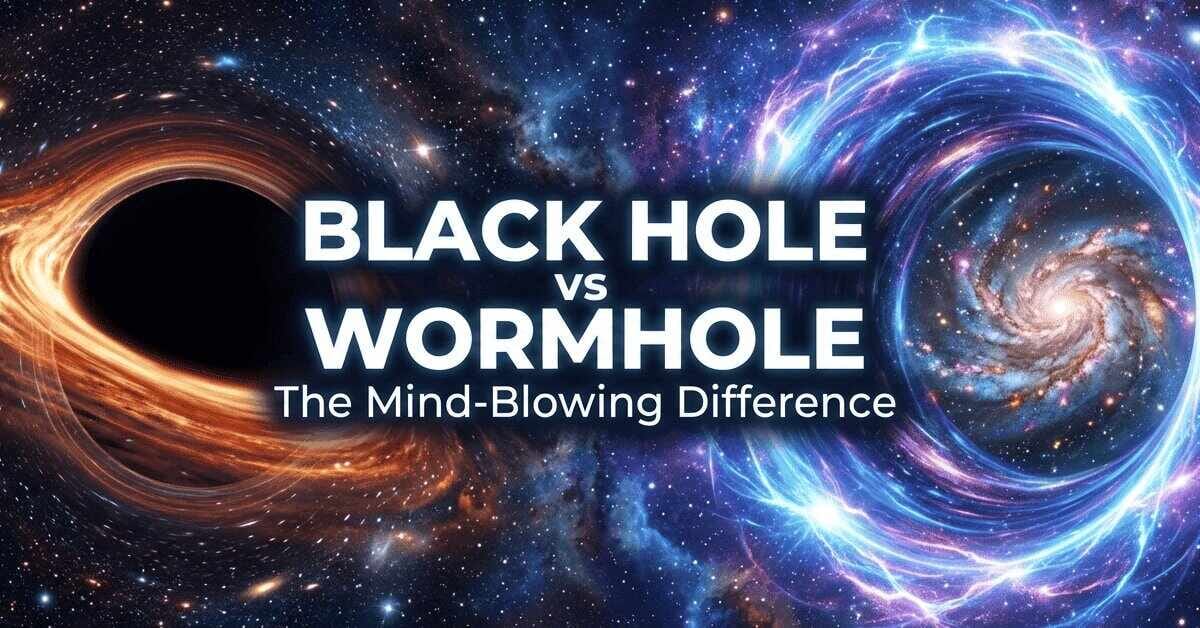
Have you ever looked up at the night sky and wondered what the strangest things in the universe actually are? Two cosmic phenomena have captured human imagination for decades: black holes and wormholes. One has been photographed. The other may not even exist. But both are so mind-bending that scientists, filmmakers, and philosophers can't stop talking about them.
So what exactly is the difference between a black hole and a wormhole? And could they actually be connected? Let's break it all down.
What Is a Black Hole?
A black hole is one of the most extreme objects within the known universe. It is a region in space in which gravity is so effective that nothing, not even light traveling at 300,000 km per second, can escape
it. Think about it because of the ultimate cosmic entice.Black holes don't just appear out of nowhere. A black hole is fashioned while a completely massive superstar dies, and its residual core has a mass at least 3 times that of our solar system. So dense that it curves the shape of spacetime around it to such an extent that nothing can escape, not even light. When a large megastar runs out of nuclear gasoline, it can no longer support its own weight. The middle collapses inward with unimaginable pressure, triggering a catastrophic explosion referred to as a supernova. What remains is a black hole, a point of limitless density referred to as a singularity, surrounded by a boundary from which there is no escape.What Is a Wormhole?
If black holes are cosmic traps, wormholes are cosmic shortcuts. A wormhole is a theoretical tunnel through spacetime connecting two separate points in the universe or even two different universes.
The keyword here is "hypothetical." There is no observational evidence for macroscopic wormholes, nor is there any compelling theoretical reason to expect them within Einstein's theory. Nevertheless, mathematics allows them, and hence scientists have continued to explore their possibilities seriously.
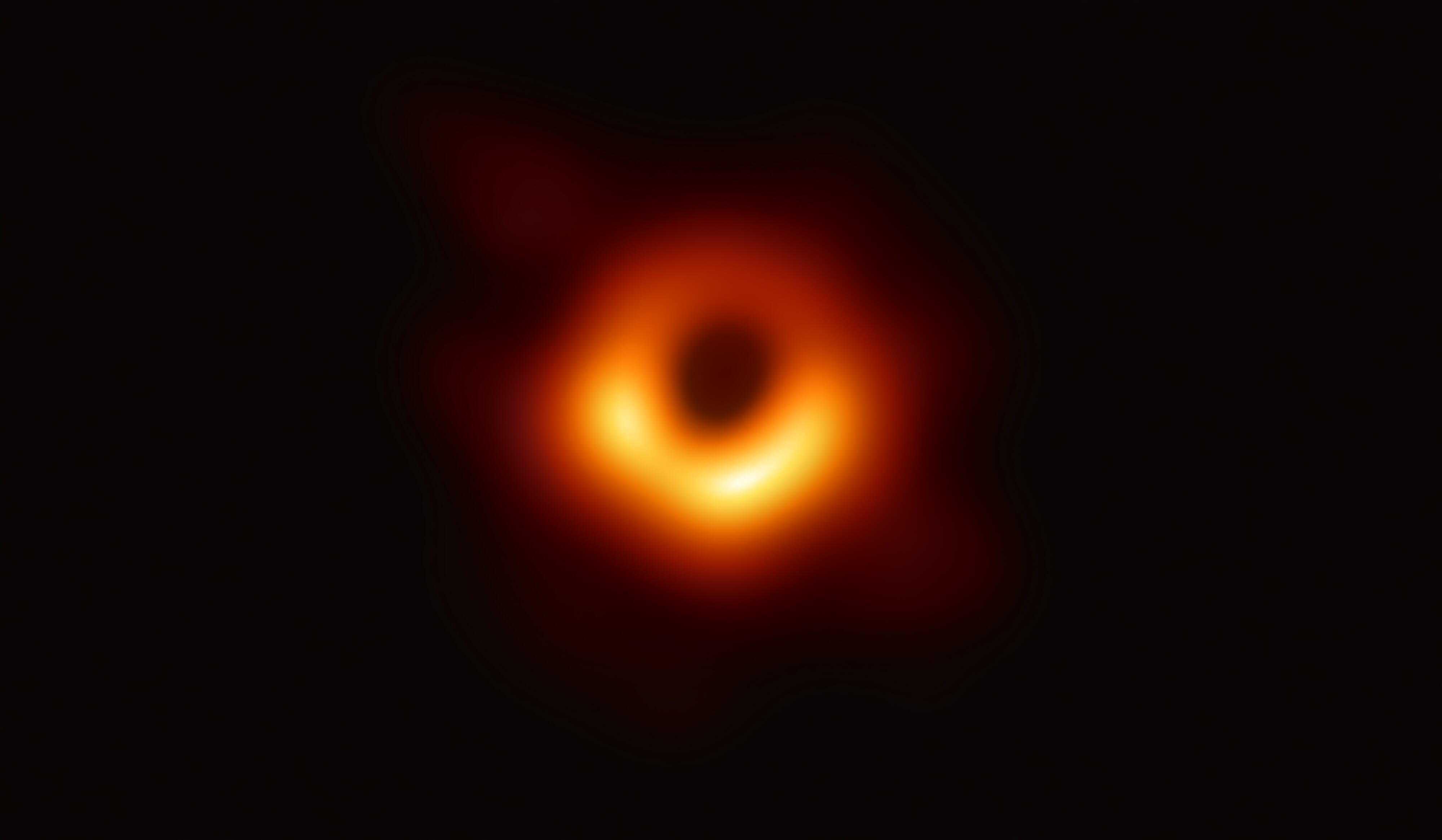
First Ever Black Hole Photograph (M87, 2019)
What Is a Wormhole?
If black holes are cosmic traps, wormholes are cosmic shortcuts. A wormhole is a theoretical tunnel through spacetime connecting two separate points in the universe or even two different universes.
The keyword here is "hypothetical." There is no observational evidence for macroscopic wormholes, nor is there any compelling theoretical reason to expect them within Einstein's theory. Nevertheless, mathematics allows them, and hence scientists have continued to explore their possibilities seriously.
First Ever Black Hole Photograph (M87, 2019)
How they form and where they come from
Black holes form through known, real processes: dying stars, collisions between massive objects, or dense regions in the early universe. We've watched stars orbit invisible companions. We've seen glowing gas disks being consumed. These are clear signs of black holes at work. Wormholes, on the other hand, are hypothetical. The math allows them. But making one stable enough to travel through would require exotic forms of matter or energy we've never found. Some theories suggest tiny wormholes may have appeared in the universe's earliest moments. But those would be microscopic and short-lived.
The mind-blowing difference science rarely explains.
Here's what most people miss. A black hole is a one-way trap. A wormhole, in theory, is a two-way shortcut. Fall into a black hole, and you're cut off from the rest of the universe. A wormhole, if it worked, would let you travel from point A to B and back again. But that "if" carries enormous weight. A stable wormhole might need "negative energy" or physics we don't yet understand.
There's another key difference. Black holes are violent. They tear apart matter, release bursts of X-rays, and warp the space around them. A wormhole, as imagined by theorists, would be a calm passage bypassing all that chaos. But only in a perfect theoretical setup.
In short, black holes are observed to be destructive and one-directional. Wormholes are speculative, potentially reversible, and require exotic conditions.
Interesting facts
- Black holes range from a few times the Sun's mass to billions of times larger and are found at the centers of galaxies.
- The concept of wormholes appeared in physics papers in the early 20th century. The term "wormhole" came later as a visual way to describe the idea.
- Scientists have captured the shadow of a black hole using a global network of radio telescopes — a genuine modern milestone in science.
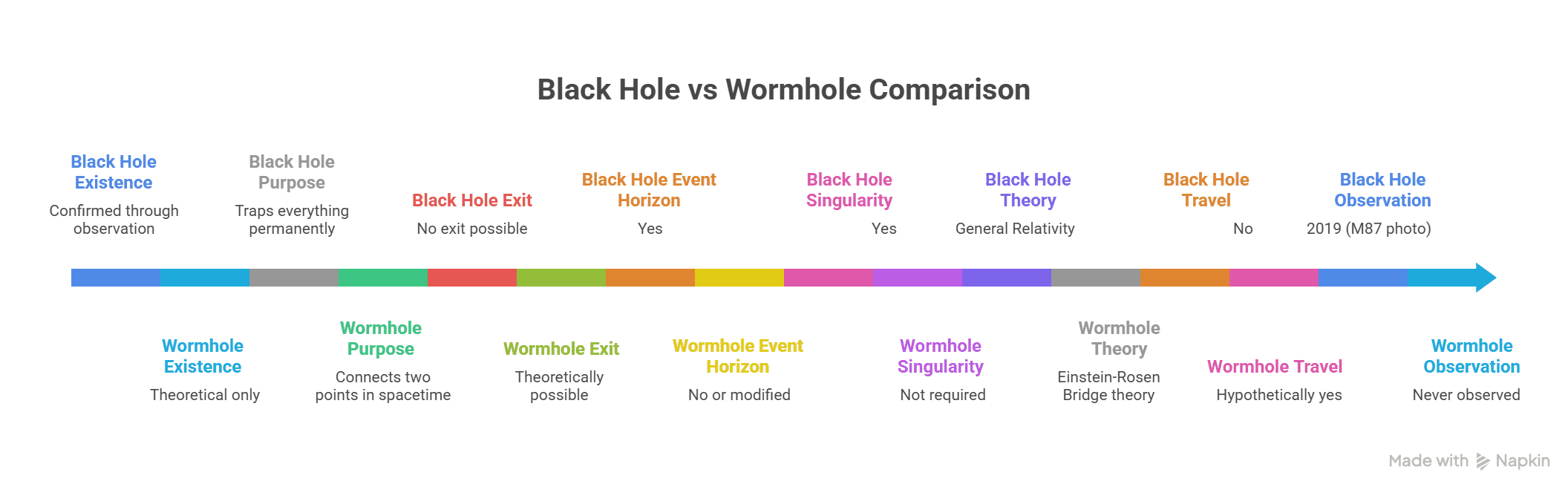
Feature
Black Hole
Wormhole
Existence
✅ Confirmed
❌ Theoretical only
Purpose
Traps everything permanently
Connects two points in spacetime
Exit possible?
No
Yes (theoretically)
Event Horizon
Yes
No (or modified)
Singularity
Yes
Not required
Based on
General Relativity
Einstein-Rosen Bridge theory
Travel possible?
No
Hypothetically yes
First observed
2019 (M87 galaxy photo)
Never observed
Radiation
Hawking radiation
Theoretical gamma sphere
Stability
Stable once formed
Extremely unstable
 Could humans ever use a wormhole to travel?
Not with what we currently know. Even if wormholes exist, keeping one open would likely require materials or energy we don't have. Safety is another problem. Entering one might expose you to extreme gravitational forces or sudden time distortions. If a wormhole connected distant parts of space, it could effectively let us travel faster than light — but only as a shortcut through space, not by breaking the laws of physics. Most scientists treat wormholes as useful thought experiments. They help explore the edges of gravity and quantum theory. They're not near-term travel technology.
Final Verdict — What's the Biggest Difference?
After exploring every angle, the single biggest difference between a black hole and a wormhole comes down to one word: exit.
A black hole has none. Once you cross the event horizon, there is no return, no escape, no other side. It is the universe's most perfect prison.
A wormhole, in theory, has two sides — an entrance and an exit, connecting distant corners of the cosmos or even different universes entirely. It is a bridge, not a trap.
But here's the extraordinary truth: recent research supports the idea that quantum entanglement and wormholes are equivalent — two sides of the same coin — meaning that the strangest object in the confirmed universe and the most speculative object in theoretical physics may ultimately be the same phenomenon described in different ways.
Black holes are real, confirmed, and photographed. Wormholes remain a beautiful mathematical possibility — one that physicists refuse to abandon, because the universe has a habit of making the impossible merely improbable.
The cosmos is stranger than we imagine. And perhaps stranger than we can imagine.
FAQs people often ask.
How they form and where they come from
The mind-blowing difference science rarely explains.
Here's what most people miss. A black hole is a one-way trap. A wormhole, in theory, is a two-way shortcut. Fall into a black hole, and you're cut off from the rest of the universe. A wormhole, if it worked, would let you travel from point A to B and back again. But that "if" carries enormous weight. A stable wormhole might need "negative energy" or physics we don't yet understand.
There's another key difference. Black holes are violent. They tear apart matter, release bursts of X-rays, and warp the space around them. A wormhole, as imagined by theorists, would be a calm passage bypassing all that chaos. But only in a perfect theoretical setup.
In short, black holes are observed to be destructive and one-directional. Wormholes are speculative, potentially reversible, and require exotic conditions.
Interesting facts
- Black holes range from a few times the Sun's mass to billions of times larger and are found at the centers of galaxies.
- The concept of wormholes appeared in physics papers in the early 20th century. The term "wormhole" came later as a visual way to describe the idea.
- Scientists have captured the shadow of a black hole using a global network of radio telescopes — a genuine modern milestone in science.
| Feature | Black Hole | Wormhole |
|---|---|---|
| Existence | ✅ Confirmed | ❌ Theoretical only |
| Purpose | Traps everything permanently | Connects two points in spacetime |
| Exit possible? | No | Yes (theoretically) |
| Event Horizon | Yes | No (or modified) |
| Singularity | Yes | Not required |
| Based on | General Relativity | Einstein-Rosen Bridge theory |
| Travel possible? | No | Hypothetically yes |
| First observed | 2019 (M87 galaxy photo) | Never observed |
| Radiation | Hawking radiation | Theoretical gamma sphere |
| Stability | Stable once formed | Extremely unstable |
Could humans ever use a wormhole to travel?
Not with what we currently know. Even if wormholes exist, keeping one open would likely require materials or energy we don't have. Safety is another problem. Entering one might expose you to extreme gravitational forces or sudden time distortions. If a wormhole connected distant parts of space, it could effectively let us travel faster than light — but only as a shortcut through space, not by breaking the laws of physics. Most scientists treat wormholes as useful thought experiments. They help explore the edges of gravity and quantum theory. They're not near-term travel technology.
Final Verdict — What's the Biggest Difference?
After exploring every angle, the single biggest difference between a black hole and a wormhole comes down to one word: exit.
A black hole has none. Once you cross the event horizon, there is no return, no escape, no other side. It is the universe's most perfect prison.
A wormhole, in theory, has two sides — an entrance and an exit, connecting distant corners of the cosmos or even different universes entirely. It is a bridge, not a trap.
But here's the extraordinary truth: recent research supports the idea that quantum entanglement and wormholes are equivalent — two sides of the same coin — meaning that the strangest object in the confirmed universe and the most speculative object in theoretical physics may ultimately be the same phenomenon described in different ways.
Black holes are real, confirmed, and photographed. Wormholes remain a beautiful mathematical possibility — one that physicists refuse to abandon, because the universe has a habit of making the impossible merely improbable.
The cosmos is stranger than we imagine. And perhaps stranger than we can imagine.
FAQs people often ask.
What is the main difference between a black hole and a wormhole?
Answer: A black hole is a real, observed region of space that traps everything inside. A wormhole is a theoretical passage that might link distant places. One is proven. The other is speculative.
Can a wormhole take you back in time?
Answer: Some theoretical wormhole models allow for time shifts on paper. But building such a wormhole would need physics we don't yet have. Time travel via wormholes remains a theory, not reality.
Are black holes dangerous to Earth?
Answer: Not right now. The nearest black holes are far away and pose no threat. A black hole would only be dangerous if it formed inside or traveled into our solar system, which is extremely unlikely.
Sources & References
This article is based on verified scientific research and trusted sources: